
One of the presuppositions of NLP is that there is no failure, only feedback. The premise is that if you view those results which are different from what you wanted as feedback rather than failure, you can learn from what you did and then do better. It’s a great notion. It flips your understanding on its head. In a world without failure, you can learn and grow. Additionally, you can see results for what they are. They are results and nothing more. It all seems so positive. And it is, because without failure, feedback is now the only option.
 You are conditioned to see outcomes as successes or failures. You either get what you want or you get something else. That something else is failure. It’s all so binary. The reality is that success is rarely absolute. Conversely, failure is nuanced from just off the mark to the opposite of what you wanted. Therefore, the gap between success and failure becomes a scale, with infinite outcomes which to a greater or lesser extend satisfy us.
 Therefore, faced with an outcome, you then have choices. Accept where you are and move forward. Alternatively, you can give up and retreat to our comfort zones. However, you can also take a step back and take stock. Work out what worked and what you want to do differently. Embark on a new course of action. And repeat.
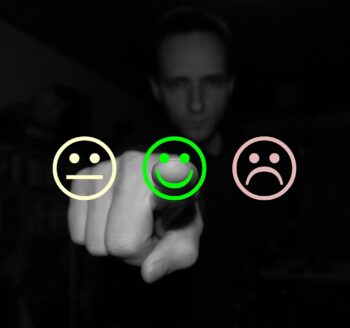 Importantly, in my view at least, is the missing step. You have an outcome, which you either want or which is different from what you want. You can leap into action or sink into inertia. What’s missing is that reaction to our emotional response. If you’re pleased, let’s celebrate. If you’re disappointed, let’s acknowledge the emotions and how you feel. It’s OK to not be OK.
What perhaps is less OK is wallowing in the negative emotions. Equally, riding success and expecting this to continue without action is risky. Crucially, once you’ve acknowledged and accepted how your outcome made you feel, it’s then time to move forward. This is the essential step. Take the action. Understand the outcome. Acknowledge how that outcome makes you feel. Regroup and take more action.
So, have a plan or a goal, and then take action. Review your progress and accept how you feel. Learn what worked and what could have worked better. Establish what you want to do differently. And then take action.
If you can do it, do it now. If you’re not sure, book an initial consultation here, and then take the next step. You know that you can do it, and you know that it makes sense, don’t you?
