
How much time, I wonder, do you spend feeling stressed? From the pressures of work to family life to all that’s going on in the world, it’s easy to lose the inner peace that you actually want. Similarly, it’s with surprising ease that you go from feeling at one with the world to being overcome with stress when things suddenly go wrong. Perfect days ruined by an unwanted moment. I’m sure we’ve all been there. However, does it have to be that way? Obviously, it does not. Fortunately, there are simple tips to go from stressed out to inner peace.
 Firstly, I think it requires a bit of self-analysis. Not something you may be used to doing. Work out when you get stressed. You may end up with quite a list. Additionally, you may get stressed by realising just how much you get stressed. Equally, you may get stressed by realising how much of the time you’re actually experiencing stress.
Secondly, once you have your list, what themes do you notice? Are there recurring times? Are there similar events? Or, is it all about the people?
 Thirdly, what it within your power to change? The daily commute may be your biggest source of stress. And, unless you’re a city planner or an all-powerful politician, you probably can’t do much about it. Or can you? Can you leave earlier or later? What about a different route? Is there something with which you can distract yourself?
Obviously, you may find that there are lots of things on your list that you can’t change. Crucially, though, if there are things that you can change, change them now.
The big question, then, is what to do with everything else? You know, the things you cannot change.
So, the self-analysis may have been hard. I did warn you. Accepting what you can’t do anything about may be even harder.
Realistically, though, if there is nothing you can do about something, what purpose does expending energy achieve? Possibly a lot. You may enjoy having something to moan about. Equally, it may focus your mind on what you dislike and what stresses you out.
That said, if there’s nothing you can do, it’s outside of your control or influence, wouldn’t your energy be better spent elsewhere? And that’s where it can get really hard.
Part of it is down to acceptance. This is how it is, you have no control over it, and irrespective of how much you stress about it, nothing changes. You can then focus your energy on the areas of your life over which you do have control. Put your energy where you can make a difference.
I often work with people who are unhappy in their current job. They get stressed (and frustrated and angry and a host of other emotions) because they’re doing something that they’d rather not be doing. Stress is exhausting.
If there are reasons for not leaving or looking elsewhere, learn to live with the job. Accept and move forward. Crucially, you are in control of how you react. It may not feel like it, yet it is an absolute truth. If you choose to be stressed, that’s your choice. And if you chose that, it’s really simple; choose something better.
 Similarly, I was with someone recently who was getting stressed about everything that they had to do in the coming weeks and months. Remarkably, they were choosing to do everything. No-one was telling them what to do. They had people around them who could help but they, apparently, would not do it right, causing more stress.
How much easier would they find it if they simply accepted (there it is again, acceptance) that they like to be busy and they like to be in charge. Additionally, they like to set their standards high and like the sense of doing it better than others. I’d go even further and suggest that this person likes being stressed because they like feeling and being busy.
Scheduling and planning often help with the stress. Work out what needs doing and when. And, critically, it allows you to see what you can leave. Which tasks really can be abandoned or at least left for another time? Obviously, you can’t plan for everything. Life throws curveballs. However, if you’re on top of the things you can plan and predict, it makes everything so much easier when the unexpected happens.
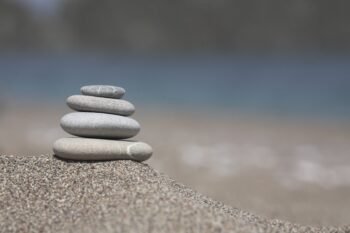 And, of course, there is the all-important “me time”. That time to take a break and recharge. From fifteen minutes of meditation or mindfulness to a day or a weekend or a week of self-care, it makes all the difference to how you feel about the everyday and what you want from all that you do.
Critically, it provides perspective. What really matters to you, who you are and what you do? If you make time for you, regain a sense of where you are and where you’re going. And, suddenly, the stress starts to fade.
Ultimately, you are in charge of how you feel. You can own the good and what could be better. Make the choices where you can and where you want. Accept the rest. Or not.
At least, be honest about it all.
If you know what to do next, do it now. If you’re not sure, book an initial consultation here, and then take the next step. You know that you can do it, and you know that it makes sense, don’t you?
